Generative AI
Personalisation in eCommerce in the Age of Generative AI
How generative AI personalisation drives real-time ecommerce experiences, higher AOV and retention with session-level intelligence.
By Helium · Published · 9 min read
Short answer. Generative AI personalisation replaces static rules and demographic segments with live, in-session decisions: re-ranking products, switching between substitutes and complements, and adapting content to what each shopper is doing right now. Start with one high-impact touchpoint, measure against a holdout group, and iterate.
Most ecommerce personalisation looks personal. To the shopper, it feels anything but. The AI in ecommerce market already crossed $9B in 2025 and is forecast to keep growing through 2034. That growth reflects one shift: shoppers now expect every click to feel relevant.
Over 50% of online buyers want tailored experiences, from the first product they see to how delivery is promised. Yet only a small share convert on their first visit. If you don’t personalise beyond acquisition, you lose not just the sale, but the chance to bring them back.
Generative AI doesn’t rely on static rules or demographic tags. It adapts in-session: re-ranking products, predicting next actions and adjusting creative in real time. That turns passive browsing into active buying, and first-time visitors into repeat customers.
This guide covers:
- Why traditional personalisation fails to meet shopper expectations
- How generative AI personalisation actually works in ecommerce
- What this shift means for retention and long-term revenue
Where traditional personalisation falls short
Most ecommerce sites still depend on rules-based systems or static recommendation widgets. They offer “related products” without understanding whether the buyer is actually comparing, deciding or just browsing.
That gap shows in the numbers: 67% of retailers say their personalisation works, but only 46% of consumers agree. Here’s what goes wrong:
- Rigid execution: A fixed “similar items” carousel doesn’t adapt if a shopper moves from festive browsing to workwear in the same session.
- Thin context: Most ecommerce personalisation still stops at demographics or past orders. It doesn’t account for live signals like price comfort, session speed or repeat size toggles.
- Missed intent: Without in-session understanding, a visitor who’s clearly comparison-shopping gets complements instead of substitutes, leading to drop-offs.
This is where generative AI changes the playbook. Instead of waiting on predefined rules, AI ecommerce personalisation reads signals in real time and acts instantly.

The rise of generative AI in personalisation
Generative AI moves personalisation from static segments to live session-level decisions. Instead of tagging shoppers into groups like “first-time visitors” or “repeat buyers”, it rewrites the store experience in real time based on what each shopper is doing right now.

Here’s how it changes your playbook:
- Context-aware discovery: Instead of showing the same first 12 products, rows reorder instantly based on the visitor’s price band, style preference or available sizes.
- Adaptive content and imagery: Generative models create banner variants, copy and even product imagery tied to seasons, regions or occasions, while staying within your brand’s tone.
- Predictive suggestions: A visitor comparing two items sees substitutes; once they make a decisive click, recommendations flip to complements that build basket size.
- Conversational problem-solving: Dead-end searches get rescued. For example, a “beach shoes” query routes directly to sandals instead of a blank screen.
Platforms like Helium combine generative AI with vision models (to classify catalogue traits like colours, fabrics or styling) and behavioural models (to read velocity, trust cues or intent signals). This means you’re not waiting for a shopper to leave before retargeting them. You adapt the journey as it unfolds: on the product list, inside the PDP and even in the cart.
Generative AI personalisation drives both immediate conversion and long-term loyalty, because every interaction feels tuned to the shopper’s intent in that exact moment. Some important benefits for your brand:
- Shoppers choose relevance: 8 out of 10 buyers say they prefer brands that tailor experiences to them. If your store doesn’t adapt in-session, you lose their trust before you earn their cart.
- Relevance drives spend: Over half of shoppers say they’re willing to pay more when they feel understood. This doesn’t mean offering more discounts, but showing the right size, the right style or the right bundle at the right moment.
- Revenue per user compounds: Brands that replaced static recommenders with GenAI-led journeys saw ARPU rise by 166%. The lift came from small but decisive actions: re-ordering product rows, switching between substitutes and complements based on behaviour, and nudging baskets with context-aware add-ons.
- Retention is the bigger win: Most visitors don’t convert in their first session. GenAI makes the rest worth retargeting, pushing high-intent SKUs into ad feeds and removing low-probability products so you don’t waste spend chasing window-shoppers.
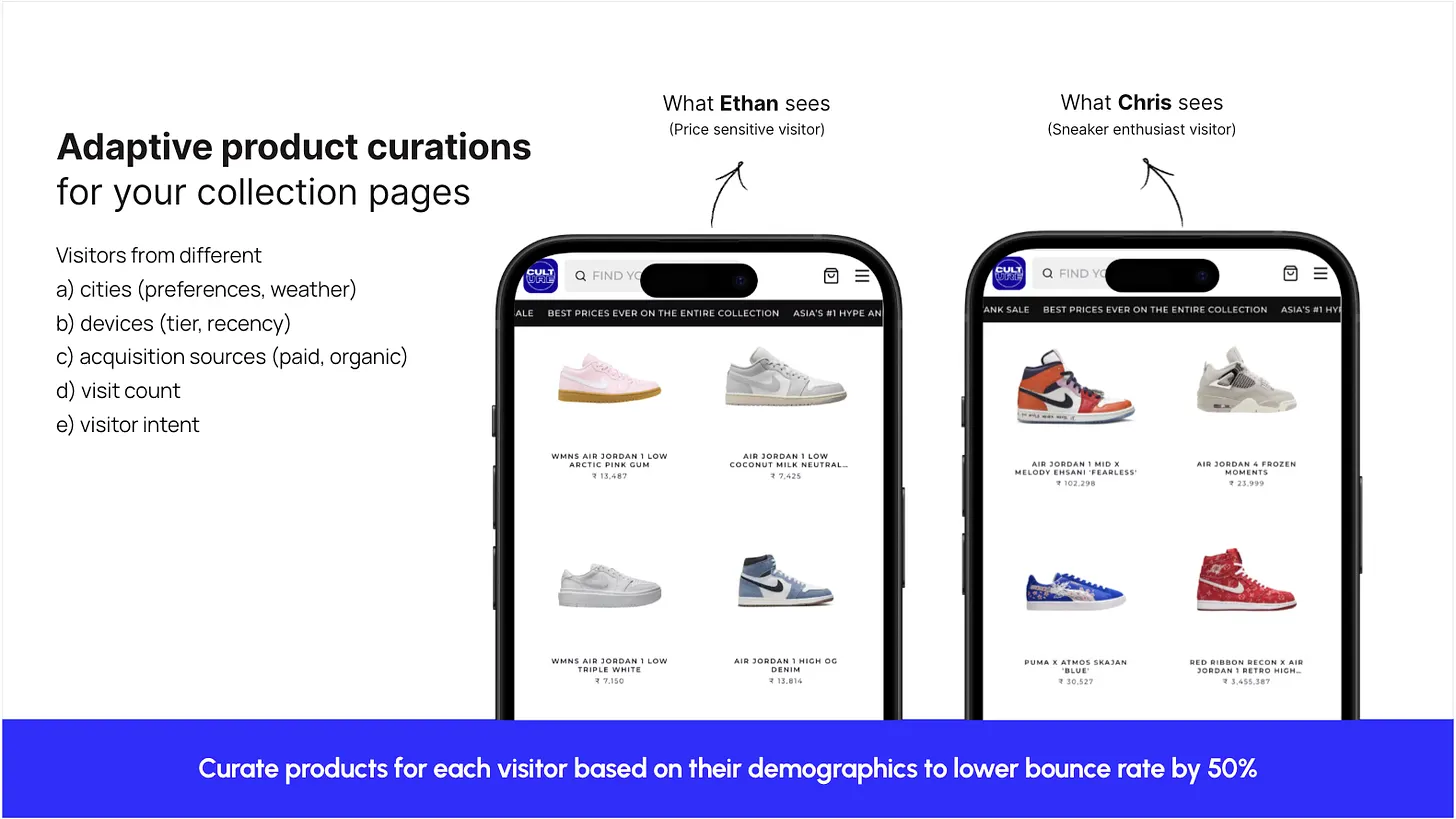

Bridging the expectation gap: what shoppers want vs. what they get
Shoppers expect brands to recognise who they are and why they’ve come. But most ecommerce sites still deliver the same experience to everyone. The result is personalisation that feels shallow and badly timed.
Take the homepage. A first-time visitor and a returning buyer usually see the same layout. One is exploring without context, the other comes back with intent to act. When you treat them identically, you lose both: the newcomer feels lost, and the loyal shopper feels ignored.
This is where adaptive layouts change the outcome. An adaptive layout reorders page sections based on live intent. If a visitor browses fast through categories, the layout prioritises product rows. If they pause on reviews, trust signals like delivery and return policies move higher.

How to implement real-time personalisation
Real-time personalisation means re-ranking products, swapping messages and reshaping layouts based on live signals, not after the session ends. With the right tools, you can layer real-time intelligence onto your existing stack and see impact within weeks.
1. Audit your existing personalisation approach
Start by mapping what you’re actually personalising today. Most brands rely on historical data: past purchases, demographics or broad segments. That’s useful, but it doesn’t capture what a shopper is doing right now.
Ask yourself:
- Are your product recommendations adapting in-session, or are they the same for everyone?
- Do new visitors and returning customers see different content, or the same homepage?
- Are high-intent signals (like size toggles, price filters or review scans) influencing what’s shown next, or being ignored?
Then check the outcomes. High bounce rates, low product page engagement, or flat email flows that treat all customers alike are signs of friction. These blind spots tell you exactly where static personalisation is falling short, and where real-time systems should plug in.
2. Choose one high-impact starting point
Don’t try to personalise everything at once. Site-wide rollouts are complex and dilute focus. Start with a single touchpoint that directly affects conversion.
High-leverage examples include:
- Homepage feed: Re-rank products in real time based on what the visitor browses, clicks or ignores.
- Cart and checkout: Surface dynamic offers or add-ons that match the shopper’s session behaviour.
- On-site search: Replace static rules with personalised results that prioritise in-stock, high-conversion SKUs.
Narrowing the scope makes testing and iteration faster. You also tie outcomes to clear metrics, like bounce rate on the homepage, AOV in the cart, or search-to-click rate. Once you see measurable results, scaling across the site becomes easier and lower-risk.
3. Select the right personalisation engine
Not all personalisation tools are equal. Many stop at segmentation or static rules, which means you’re still showing “more of the same” instead of adapting in real time. Look for a platform that goes deeper:
- Generative AI capabilities: Create personalised copy, offers and creative variants at scale without manual input.
- Behavioural signal analysis: Track live cues like dwell time, scroll depth, price comfort, product affinity and exit intent.
- Visual understanding: Recognise how shoppers engage with imagery, particularly important for categories like fashion, beauty or home.
- Session-level adaptability: Adjust recommendations, layouts and messaging as the shopper moves through the site, not after they leave.
For example, Helium is built to interpret both visual signals (catalogue attributes) and behavioural signals, so product discovery can adapt to the shopper.

4. Define your measurement framework
Real-time personalisation only works if you can prove its impact. Set clear success criteria before rollout so you’re not guessing at results later. Key metrics to track include:
- CTR on personalised modules: Are shoppers actually engaging with the tailored feeds, banners or recommendations?
- Average order value (AOV): Does adaptive merchandising increase basket size?
- Time on site and product discovery depth: Are visitors finding relevant items faster, or dropping off early?
- Customer lifetime value (CLV): Does personalisation improve repeat purchase rates over months, not just single sessions?
- Conversion uplift vs. control groups: How do personalised journeys perform against a non-personalised baseline?
Bonus tip: use A/B tests or holdout groups to isolate the effect. Without them, you risk attributing revenue gains to personalisation that actually came from other factors like promotions or traffic spikes.
5. Use quick implementation frameworks
The biggest barrier to personalisation is often execution. Long integration cycles drain momentum and delay results. Choose tools that let you launch fast without a deep engineering lift.
For example, a fast, app-based rollout can look like this:
- Day 0: Install the Shopify app or add a short script.
- Day 1: The system starts learning from live visitor behaviour.
- Day 3: Product page personalisation goes live with attribute-based curation, persona-driven FAQs, personalised visuals and dynamic content.
- Day 7: Collection pages adapt, with demographic-driven curation and behaviour-based sorting.
- Day 20: Returning visitors see tailored product and collection pages, plus cart cross-sells and bundling.
The aim of a staged rollout is to shorten personalisation cycles from months to weeks, get clear visibility into behavioural trends, and make merchandising decisions that tie directly to revenue.
The faster you implement, the faster you learn, and the faster you can scale what works across the rest of the journey.

6. Iterate based on performance
Launching personalisation is only the start. To make it work long term, you need to refine it constantly.
- Spot weak links: If shoppers are still dropping off at search, or engagement on personalised modules flatlines, that’s where you focus next.
- Update models with live data: Feed in session-level signals like repeat size toggles, time-to-cart or review scans. Stale data creates stale recommendations.
- Test new modules with purpose: Don’t stop at product feeds. Trial personalised bundles, dynamic navigation menus or localised offers, and measure which ones actually shift conversion or AOV.
- Act quickly on results: Kill modules that don’t move metrics. Scale the ones that do. Re-test as behaviour shifts with seasons, campaigns or stock changes.
Conclusion: the shift from personalisation to anticipation
Personalisation as we know it is fading. Shoppers don’t want “recommended products”; they expect the store to already know what fits their context.
The future looks like this:
- Voice-driven discovery, where shoppers speak their needs and get curated results instantly.
- Cross-device continuity, where a cart started on mobile is completed on desktop without losing context.
- Zero manual merchandising, where SKUs are ranked, paused or promoted automatically based on live performance.
- Adaptive journeys shaped by vision models that read catalogue traits and LLMs that interpret behaviour in-session.
Generative AI marks the shift from reactive personalisation to anticipation: predicting shopper intent, not just responding to it. Platforms like Helium make this practical through session-aware ranking and smarter ad feeds that reduce waste.
Sources
Keep reading
Related.
5 Ways AI Personalization Lifts Conversion Without Touching Discounts
Discounts move inventory but don’t fix hesitation. Removing friction at each step of the journey does.
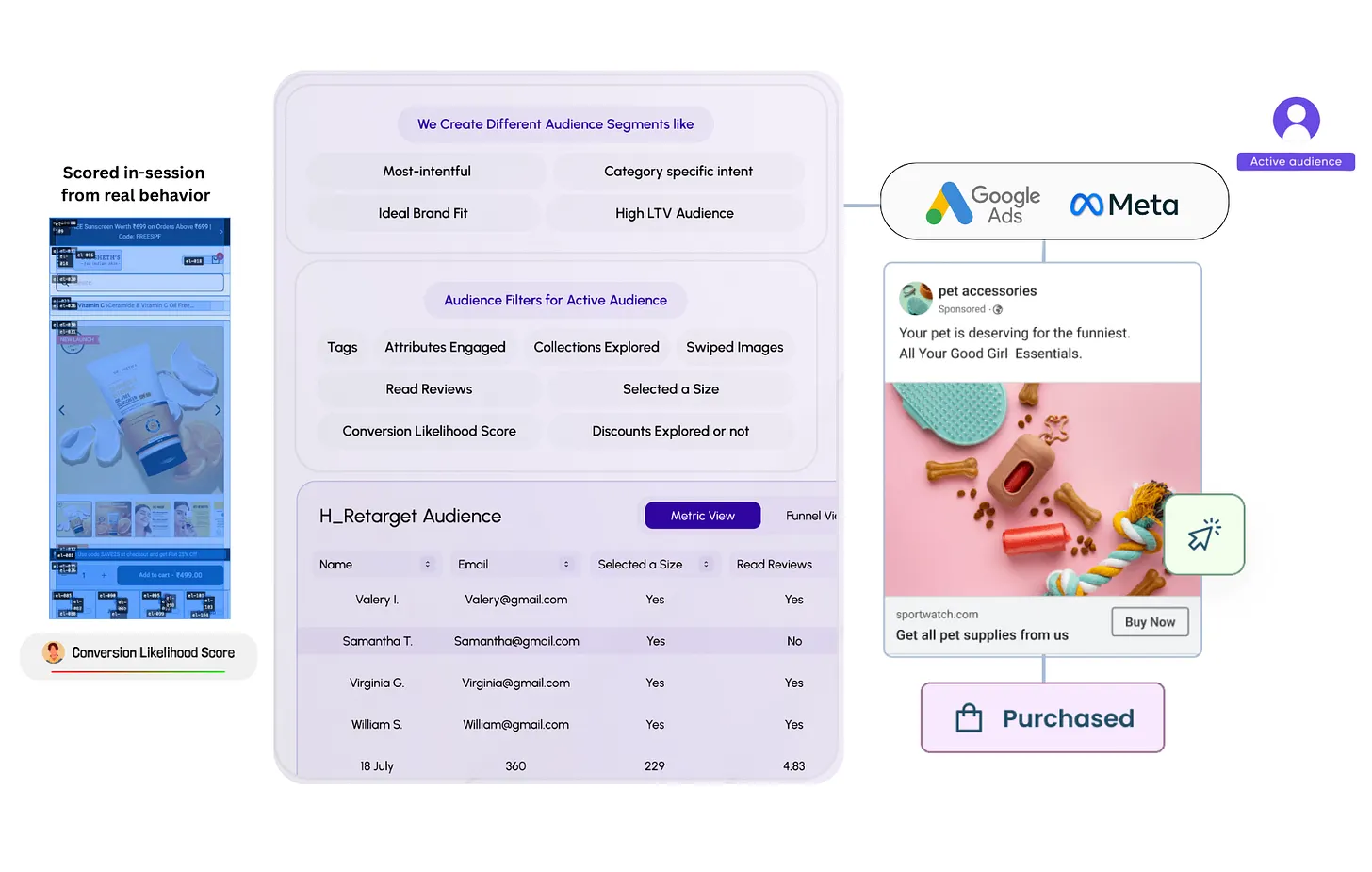
Real-Time Personalization vs. Segmentation: What’s the Difference?
Most store personalization stops at grouping shoppers. Real personalization reacts to what a shopper is doing right now.
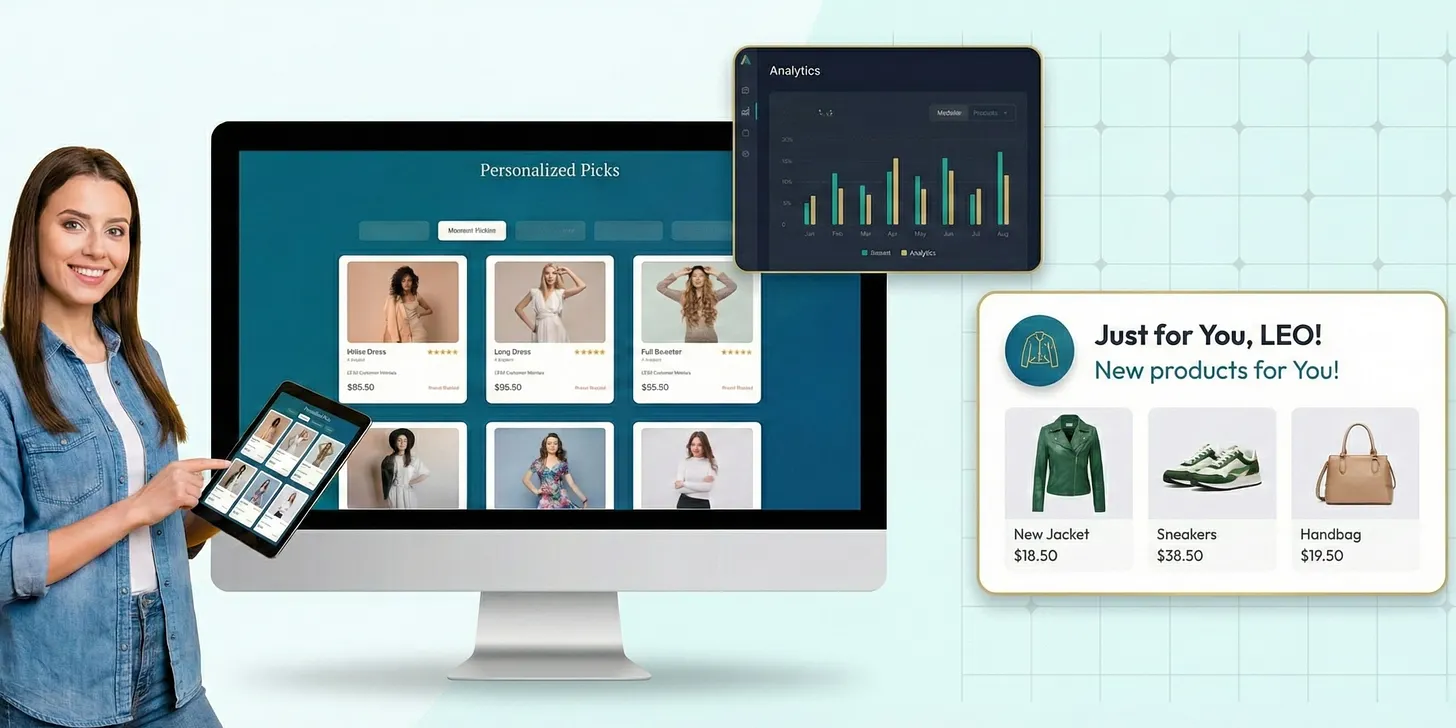
Why Product Recommendations Don’t Convert (and What to Do Instead)
Most recommendation widgets repeat yesterday's assumptions. Contextual discovery reads what the shopper is doing right now.
Helium for Shopify
Rank every collection by intent
Helium’s Curator AI ranks Shopify collections by catalogue attributes, sales, sessions and city, and re-sorts them on a schedule.
Want to test us on content first? Get a free sample